Choosing a commercial cleaning provider is an important decision for businesses in the Dallas-Fort Worth area. A commercial facility can have offices, restrooms, meeting rooms, flooring, windows, entrances, parking areas, and other spaces that require different types of cleaning and maintenance.
The right questions can help a business understand what a cleaning company actually provides, how services are scheduled, what areas are covered, and whether the provider has experience with similar facilities. Instead of comparing companies only by price, facility managers can look at service scope, cleaning frequency, specialized services, staff training, and the company’s ability to adapt to changing requirements.
Whether a business needs routine janitorial support or specialized services such as floor care, deep carpet cleaning, window washing, or pressure washing, asking the right questions creates a clearer basis for comparison.
Why the Right Questions Matter
Commercial cleaning is different from residential cleaning because business facilities often operate for long hours and may have a large number of employees, customers, visitors, or tenants moving through the building.
A medical facility, warehouse, office, school, or multi-tenant property can have very different cleaning priorities. High-traffic floors may need frequent attention, while restrooms and common areas may require daily sanitation. Large windows, parking areas, loading zones, and specialized flooring can also require separate maintenance procedures.
A commercial cleaning company should therefore be able to explain how its services can be organized around the facility rather than simply offering a standard list of tasks.
Questions to Ask Before Hiring a Commercial Cleaning Company
1. What Commercial Cleaning Services Do You Provide?
Start by asking for a detailed description of the company’s services. A provider may offer basic janitorial cleaning, while another may provide a broader range of facility maintenance services.
For example, business cleaning services can include dusting, trash removal, restroom sanitation, surface cleaning, floor maintenance, and recurring janitorial work. Additional services may include carpet cleaning, flood restoration, hard surface floor care, window washing, pressure washing, and janitorial supplies.
A clear service list makes it easier to identify which tasks are included in the regular schedule and which services are billed separately.
2. Do You Have Experience With My Type of Facility?
Experience with a similar property can be useful when evaluating a commercial cleaning company. Ask whether the company has worked with facilities similar to yours in size, layout, occupancy, and operational requirements.
For example, a warehouse may have large floor areas and loading zones, while an office may require more attention to workstations, conference rooms, kitchens, and restrooms.
Providers serving commercial facilities in Texas may work with offices, medical facilities, educational institutions, industrial properties, government buildings, churches, and multi-tenant facilities. Sonlight Cleaning states that its Dallas-Fort Worth janitorial programs serve several of these facility types.
3. How Often Will the Facility Be Cleaned?
Cleaning frequency should be based on the building’s traffic and operational needs. Ask whether the company offers daily, nightly, weekly, or periodic deep cleaning schedules.
A high-traffic facility may require more frequent service than a smaller office with fewer occupants. Restrooms, entrances, break rooms, and high-touch areas may also require more attention than areas that are rarely used.
A good cleaning plan should identify which tasks occur every day and which are performed weekly, monthly, seasonally, or as needed.
4. What Is Included in the Cleaning Checklist?
A written checklist can help prevent misunderstandings. Ask the provider to explain exactly what employees are expected to clean during each scheduled visit.
The checklist might include:
Restroom cleaning and sanitation
Trash and recycling removal
Dusting and surface cleaning
Vacuuming and mopping
Break-room cleaning
High-touch surface cleaning
Entrance and common-area maintenance
Floor cleaning
Supply restocking
You should also ask whether additional tasks such as interior windows, deep carpet cleaning, floor refinishing, or pressure washing are included or scheduled separately.
5. Do You Provide Specialized Floor Cleaning?
Flooring is one of the most frequently used parts of a commercial building. Different materials require different cleaning and maintenance approaches.
Ask whether the provider has experience with VCT, ceramic tile, concrete, terrazzo, quarry tile, rubber, or other commercial flooring systems. Services can range from routine cleaning to polishing, sealing, restoration, and preventative maintenance.
For businesses specifically researching hard surface floor cleaning in Dallas TX, it is useful to ask what equipment and methods are used for each flooring material.
The broader category of cleaning commercial floors can include routine scrubbing as well as periodic maintenance designed to preserve the condition and appearance of the flooring.
6. Can You Handle Carpet Cleaning and Water Damage?
Carpets can accumulate dirt, stains, dust, and other buildup over time. Ask whether the provider offers deep carpet cleaning and whether carpet maintenance can be coordinated with regular janitorial service.
Businesses searching for carpet cleaning services Dallas TX may also need to understand what happens when carpeting is affected by a leak, flooding, or another water-related event.
Some providers offer carpet cleaning alongside flood restoration. Sonlight Cleaning describes carpet and flood restoration services that include deep cleaning, drying, and restoration support for commercial properties.
If water enters a commercial facility, ask how the company handles a water damage restoration service, including extraction, drying, dehumidification, and assessment of affected flooring. The appropriate restoration services can depend on the amount of water exposure and the type of flooring involved.
7. Do You Offer Commercial Window Cleaning?
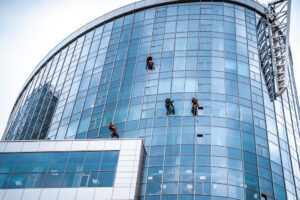
Windows can require a different maintenance schedule from interior cleaning. Ask whether the company provides both interior and exterior window cleaning and whether the service can accommodate the building’s height and access requirements.
Businesses looking for commercial window cleaning Dallas TX or window washing Dallas TX should ask about equipment, safety procedures, scheduling, and whether difficult-to-reach windows are included.
The frequency can depend on building location, exposure to dirt and weather, traffic, and the appearance standards of the property. Sonlight Cleaning describes interior and exterior window washing programs for commercial facilities throughout the DFW area.
8. Do You Provide Pressure Washing?
Exterior areas can collect dirt, oil, gum, grime, and other buildup. Ask whether the cleaning company provides pressure washing services Dallas TX and what types of surfaces can be cleaned.
Pressure washing may be used for appropriate areas such as sidewalks, entrances, parking areas, loading zones, breezeways, and some exterior building surfaces.
Businesses researching Dallas TX pressure washing or pressure washing in Dallas should also ask how often the service is recommended and whether the provider adjusts pressure and cleaning methods according to the surface.
Commercial pressure washing Dallas TX may be scheduled separately from routine janitorial work because exterior surfaces often have different maintenance requirements.
9. Who Provides the Cleaning Supplies and Equipment?
Another useful question concerns supplies and equipment. Ask whether the cleaning company supplies chemicals, disinfectants, paper products, mops, vacuum equipment, floor-care equipment, and other materials.
This can help businesses determine their actual cleaning budget and avoid unexpected supply responsibilities.
It is also worth asking how cleaning products are selected and whether the provider has procedures for storing and using chemicals appropriately.
10. How Are Cleaning Teams Supervised?
A cleaning program is only effective when scheduled tasks are completed consistently. Ask how teams are trained, supervised, and evaluated.
Questions can include:
Who supervises the cleaning team?
Are employees trained for commercial environments?
How are cleaning checklists monitored?
Who should the facility manager contact with questions?
How are missed tasks reported and corrected?
Is there a process for reviewing service quality?
Sonlight Cleaning states that its commercial janitorial teams use trained personnel and documented procedures for recurring services.
11. Can the Cleaning Schedule Change When Business Needs Change?
Businesses do not always operate on the same schedule throughout the year. Seasonal activity, special events, renovations, occupancy changes, and changes in operating hours can affect cleaning requirements.
Ask whether the provider can increase or decrease service frequency when circumstances change. A flexible arrangement can be useful for businesses that have changing occupancy levels or occasional events requiring additional cleaning.
12. How Are Emergencies Handled?
Unexpected cleaning situations can include plumbing leaks, spills, flooding, severe weather, or accidents. Ask whether the company provides emergency cleaning support and which situations are covered.
Sonlight Cleaning’s commercial services page describes emergency response cleaning for situations including burst pipes, rain, hail, and customer accidents.
The important point is to understand the provider’s emergency process before an incident occurs, including response availability, scope of service, and whether emergency work is priced separately.
Comparing Commercial Cleaning Services
When comparing providers, it helps to look beyond the basic cleaning rate. The following factors can provide a more complete picture:
Factor | Questions to Ask |
|---|---|
Service scope | What tasks are included in routine cleaning? |
Frequency | How often will the facility be serviced? |
Facility experience | Has the company worked with similar properties? |
Floor care | Can different flooring materials be maintained? |
Carpet care | Is deep carpet cleaning available? |
Restoration | Can the company respond to water-related incidents? |
Windows | Are interior and exterior windows included? |
Exterior care | Is pressure washing available? |
Supplies | Who provides cleaning chemicals and equipment? |
Supervision | How are teams trained and monitored? |
Scheduling | Can service frequency change when needed? |
Emergency response | What happens when an unexpected cleaning issue occurs? |
Pricing | Are additional services and charges clearly explained? |
Understanding the Difference Between Routine and Specialized Cleaning
Routine janitorial service focuses on maintaining a facility on a recurring basis. Specialized services address specific cleaning or maintenance requirements that may not be necessary during every scheduled visit.
For example, regular floor cleaning may be part of a janitorial program, while floor polishing or sealing may be performed periodically. Similarly, routine carpet maintenance differs from deep carpet cleaning or flood restoration.
This distinction is important because a business may need more than one type of service to maintain its facility properly.
What Should You Know Before Signing an Agreement?
Before signing a service agreement, review the cleaning schedule, service checklist, areas covered, pricing structure, cancellation terms, additional services, and procedures for requesting changes.
Ask for clarification if any part of the agreement is unclear. It is particularly important to understand whether specialized work such as carpet cleaning, window washing, commercial floor cleaning, or pressure washing is included in the regular price.
The goal should be to have a clear understanding of what the cleaning company is responsible for and what the business will need to arrange separately.
Commercial Cleaning Support from Sonlight
Sonlight Cleaning provides commercial cleaning and facility maintenance services throughout the Dallas-Fort Worth region. Its listed services include janitorial services, carpet cleaning and flood restoration, hard surface floor care, window washing, pressure washing, and janitorial sanitation supplies.
The company describes cleaning programs for offices, medical facilities, educational institutions, warehouses, industrial facilities, government buildings, churches, and other commercial properties. Its Dallas-Fort Worth janitorial programs can be structured around daily, weekly, nightly, or periodic deep cleaning requirements.
For businesses evaluating commercial cleaning companies in Texas , these service categories provide a useful example of how routine janitorial work can be combined with specialized facility maintenance. More information about the company and its services is available through its commercial cleaning services and janitorial services pages.
What should I ask a commercial cleaning company before hiring it?
Ask about services, cleaning frequency, facility experience, staff training, supplies, equipment, supervision, pricing, contract terms, specialized services, and emergency response procedures.
How often should a commercial facility be cleaned?
There is no single schedule for every facility. Daily or nightly cleaning may be appropriate for high-traffic properties, while smaller facilities may require less frequent service. The schedule should reflect occupancy, usage, and sanitation requirements.
What is included in business cleaning services?
Business cleaning services can include janitorial cleaning, restroom sanitation, trash removal, dusting, vacuuming, mopping, surface cleaning, and other routine facility maintenance tasks. The exact scope varies by provider and agreement.
Can commercial cleaners provide floor maintenance?
Many commercial cleaning providers offer floor maintenance in addition to routine janitorial service. Depending on the flooring, this may include scrubbing, polishing, sealing, or restoration.
What is the difference between deep carpet cleaning and regular carpet cleaning?
Routine carpet maintenance generally addresses everyday dirt and surface buildup. Deep carpet cleaning is a more intensive process intended to address embedded soil, stains, and accumulated buildup.
Do commercial cleaning companies offer window and pressure washing?
Some providers offer both services. Businesses should confirm whether interior and exterior window cleaning, sidewalks, parking areas, entrances, and other exterior surfaces are covered.
What should I look for in commercial cleaning services Texas?
Look for a clearly defined service scope, appropriate cleaning frequency, experience with similar facilities, trained staff, transparent pricing, documented procedures, and access to specialized services when required.
Final Thoughts
Hiring a commercial cleaning company should begin with questions rather than assumptions. Businesses need to understand exactly what services are offered, how often cleaning will take place, who will perform and supervise the work, and how specialized requirements will be handled.
A facility may need routine janitorial cleaning along with carpet maintenance, floor care, window washing, pressure washing, or water damage restoration support. Evaluating these needs in advance makes it easier to compare commercial cleaning services Texas providers and select a service structure that fits the property.
For businesses comparing commercial cleaning companies in Texas, the most useful provider is not necessarily the one with the longest service list or lowest initial price. The better comparison is based on clear responsibilities, appropriate service frequency, facility experience, communication, and the ability to address both routine and specialized cleaning requirements.